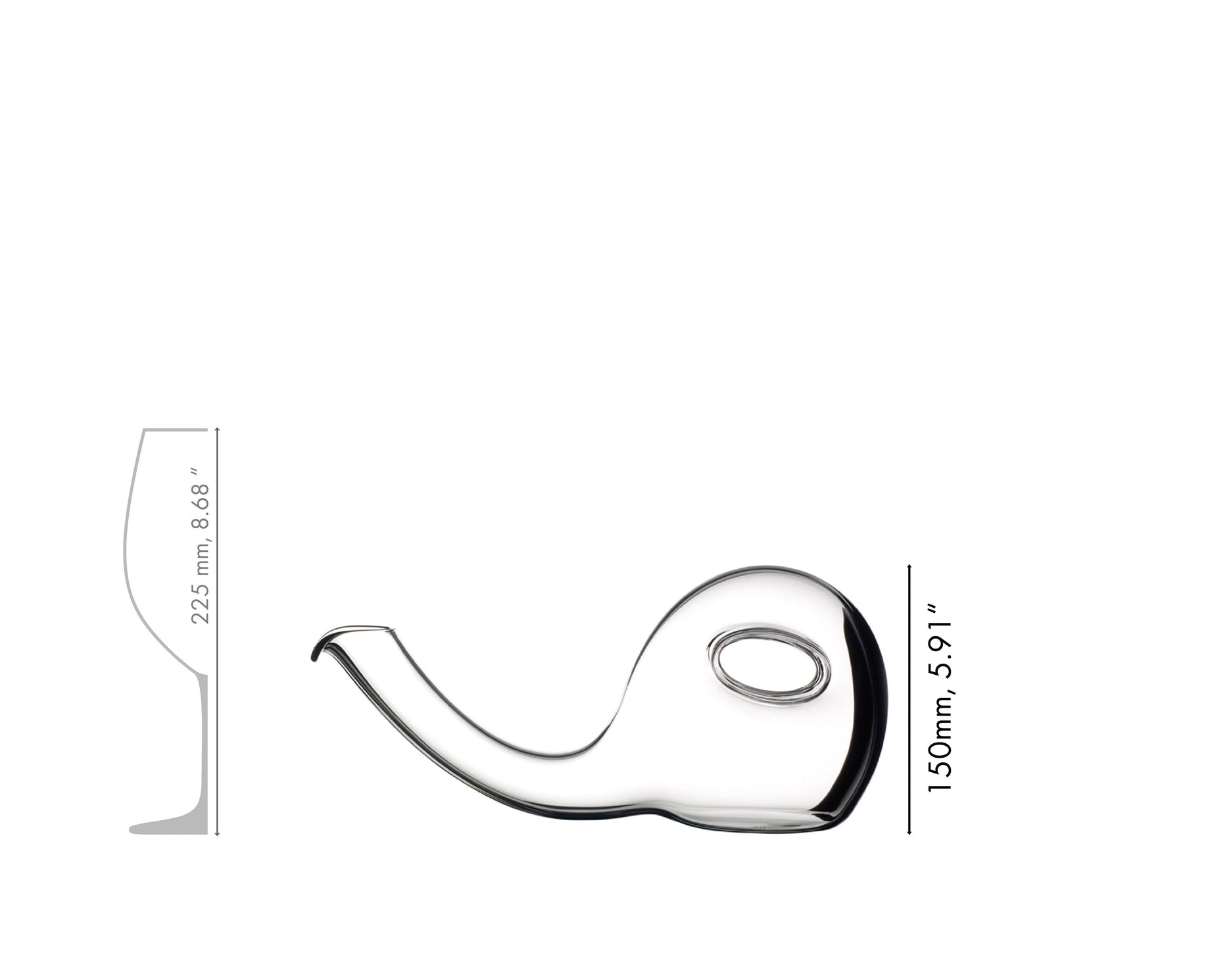
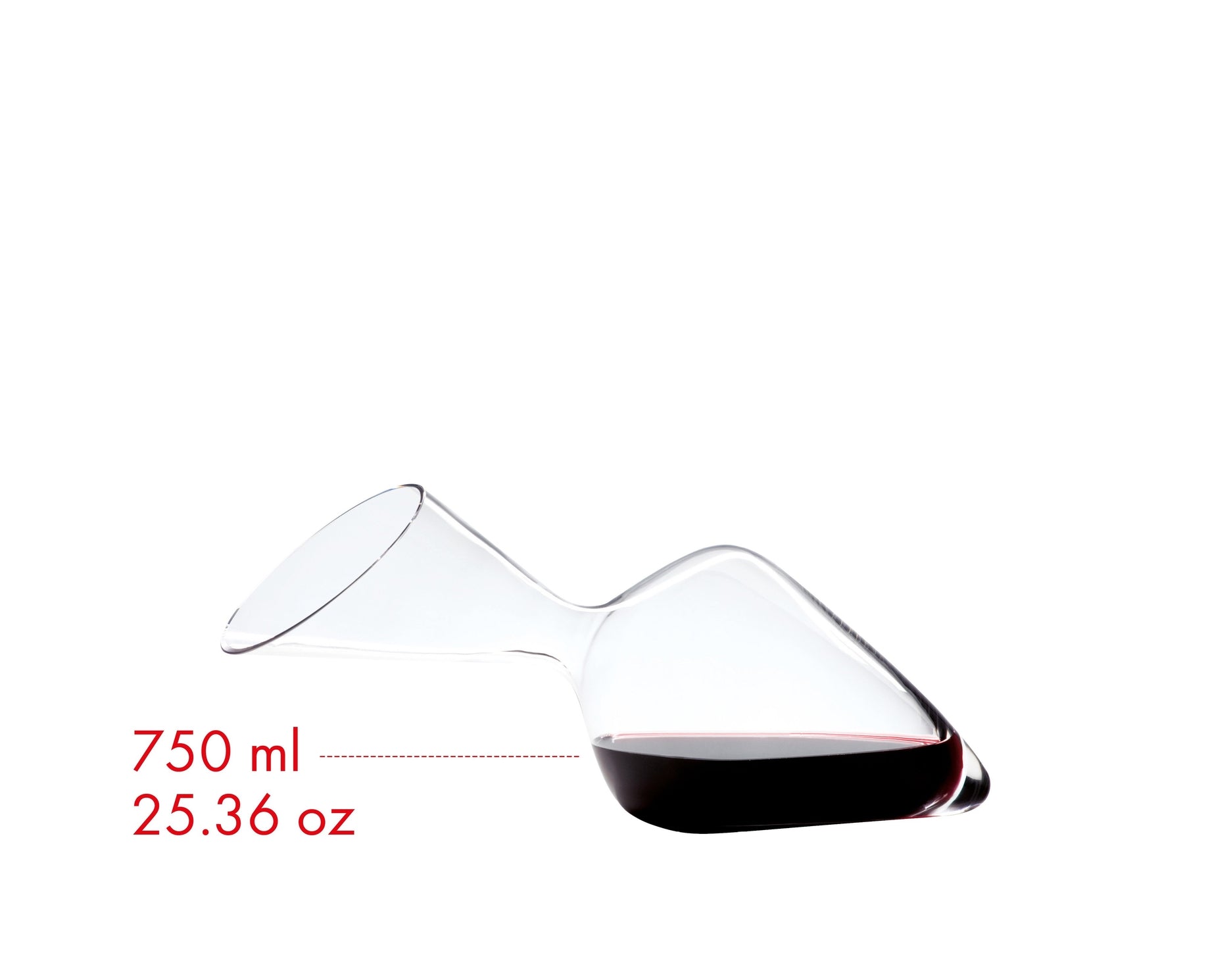
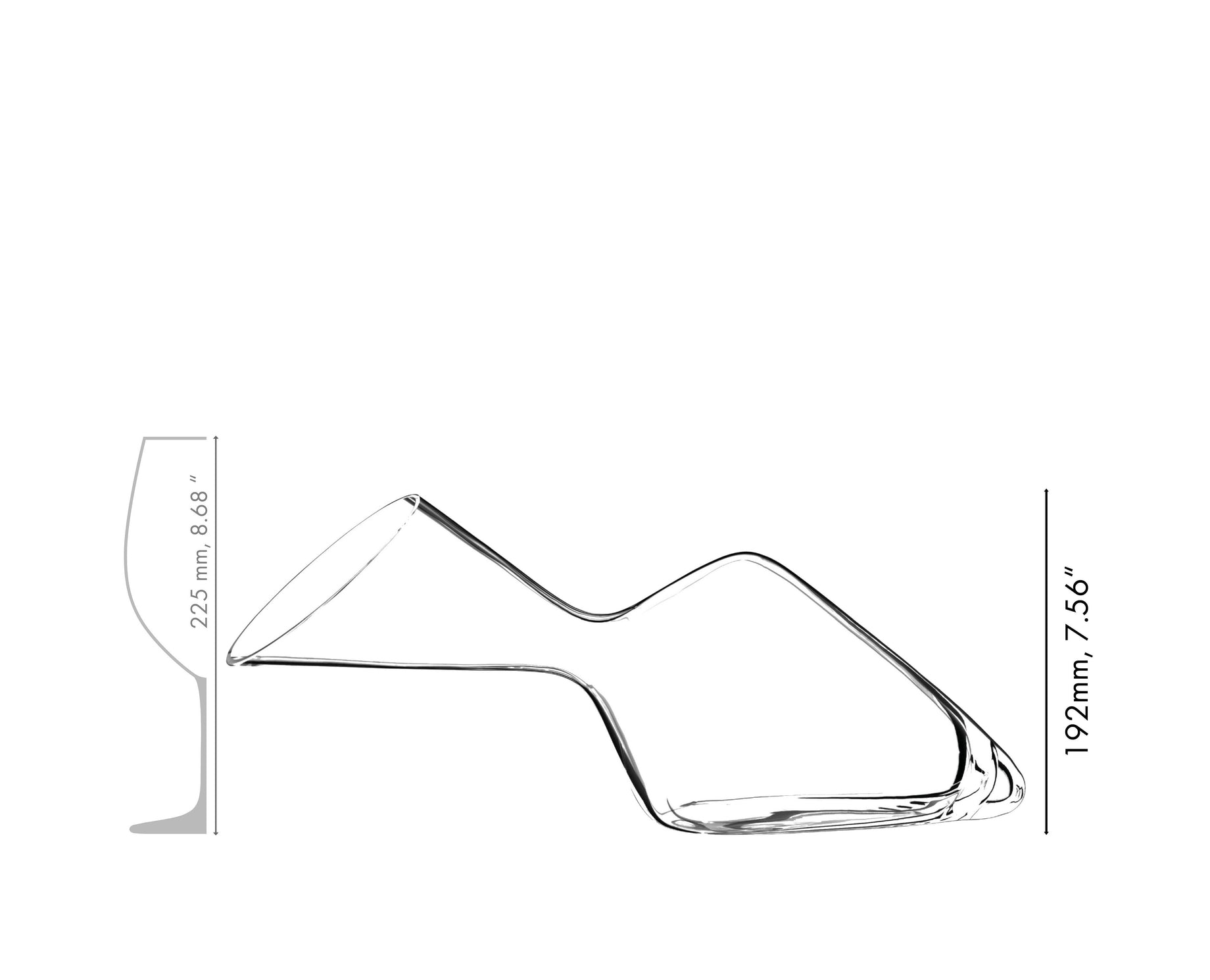
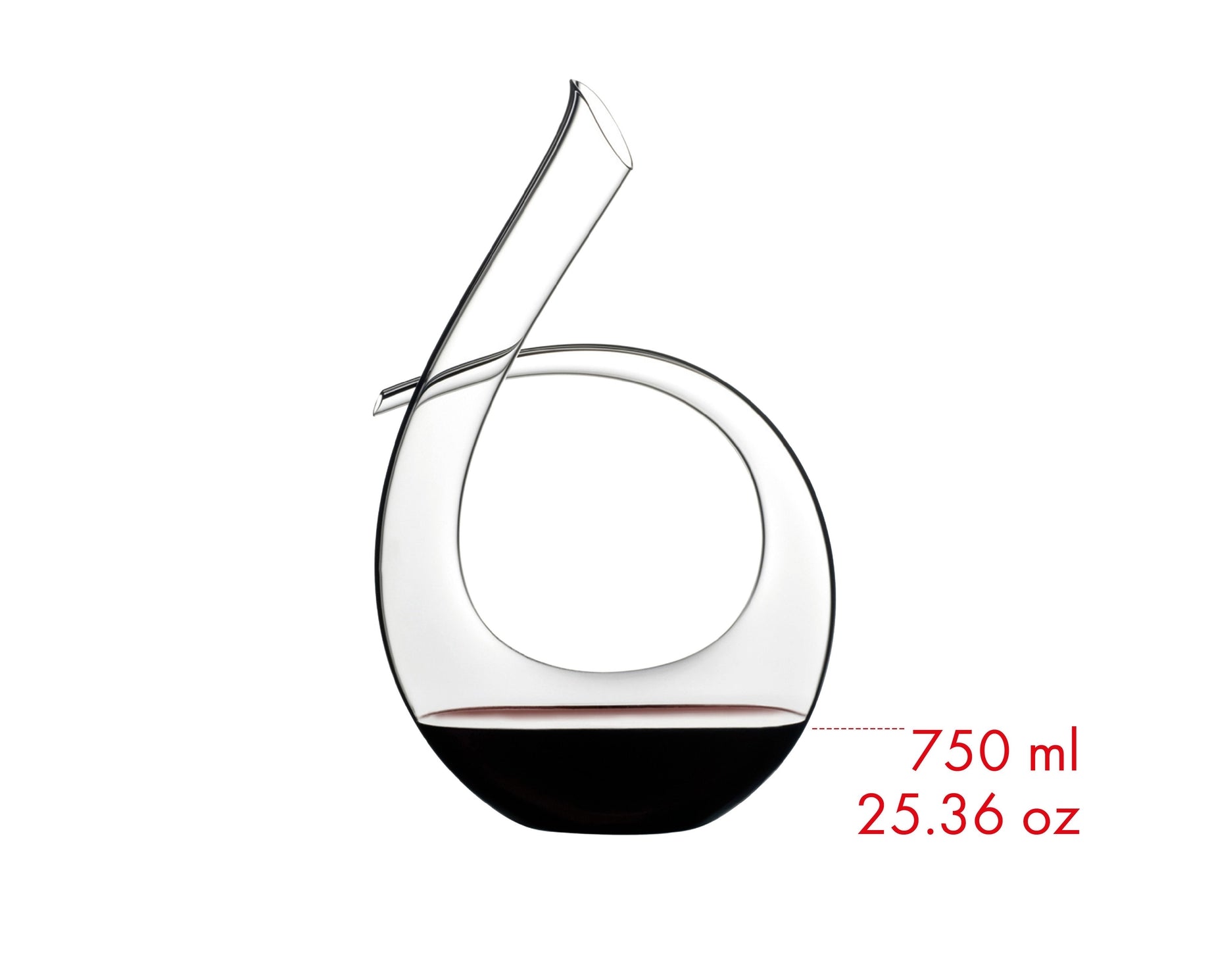
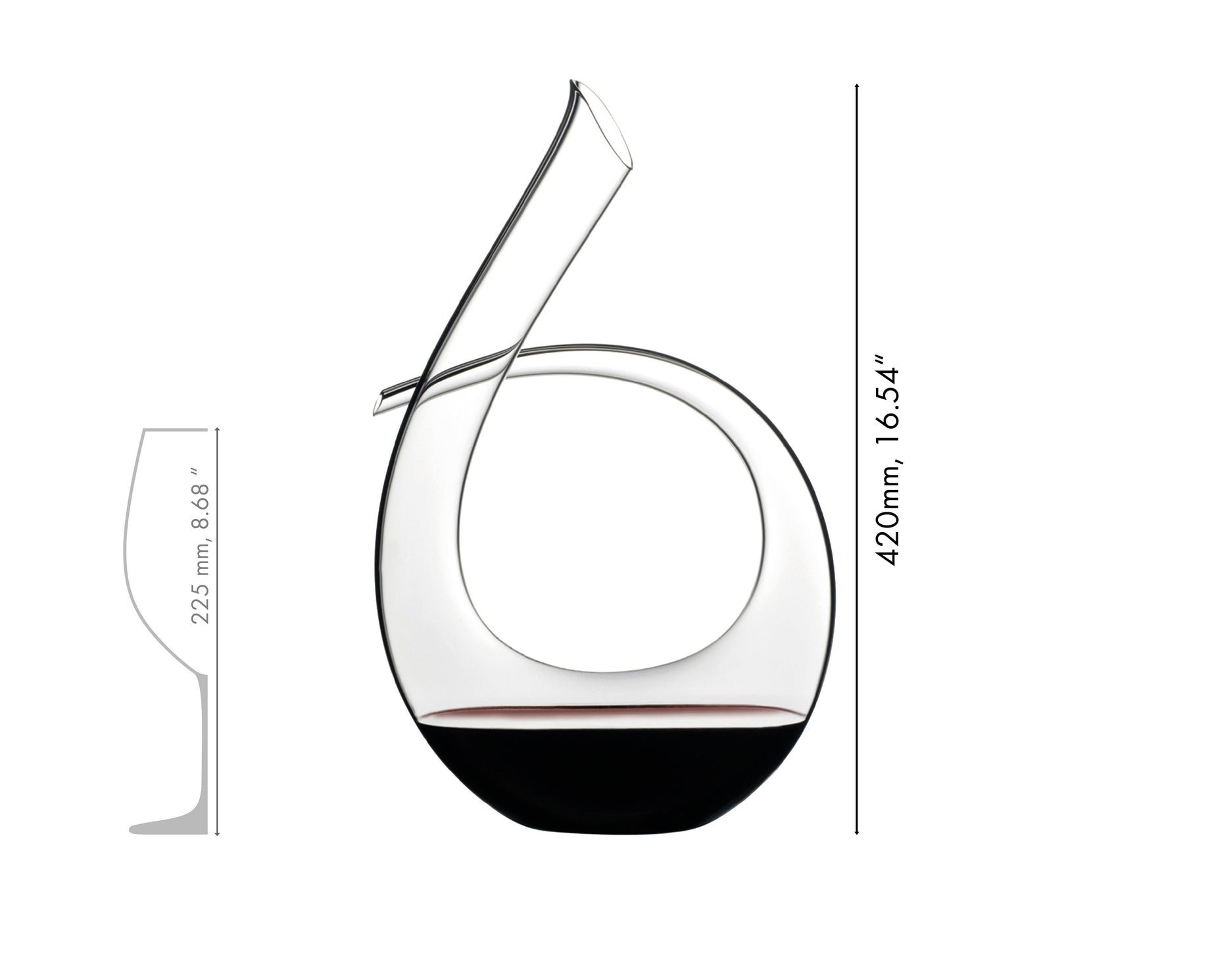
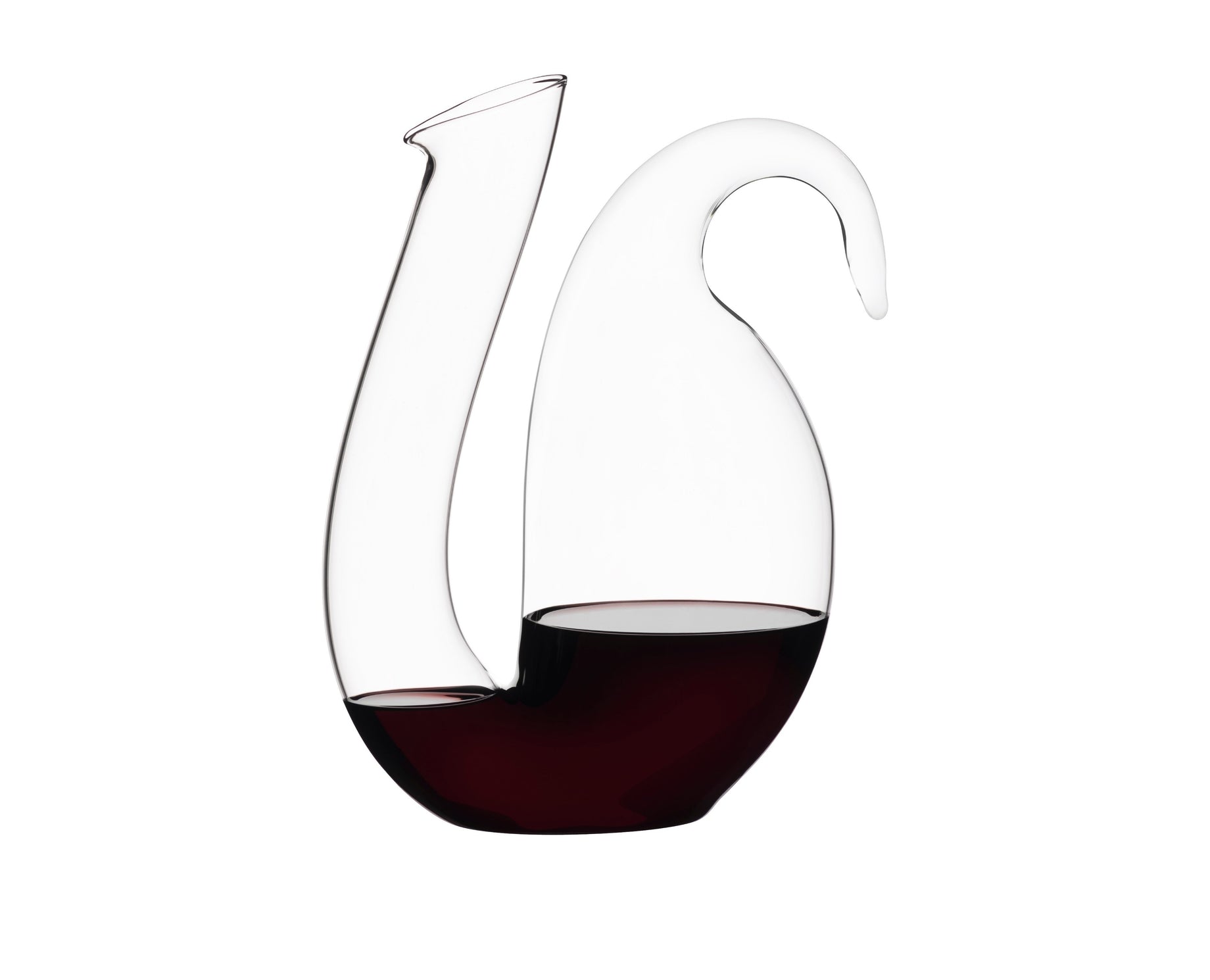
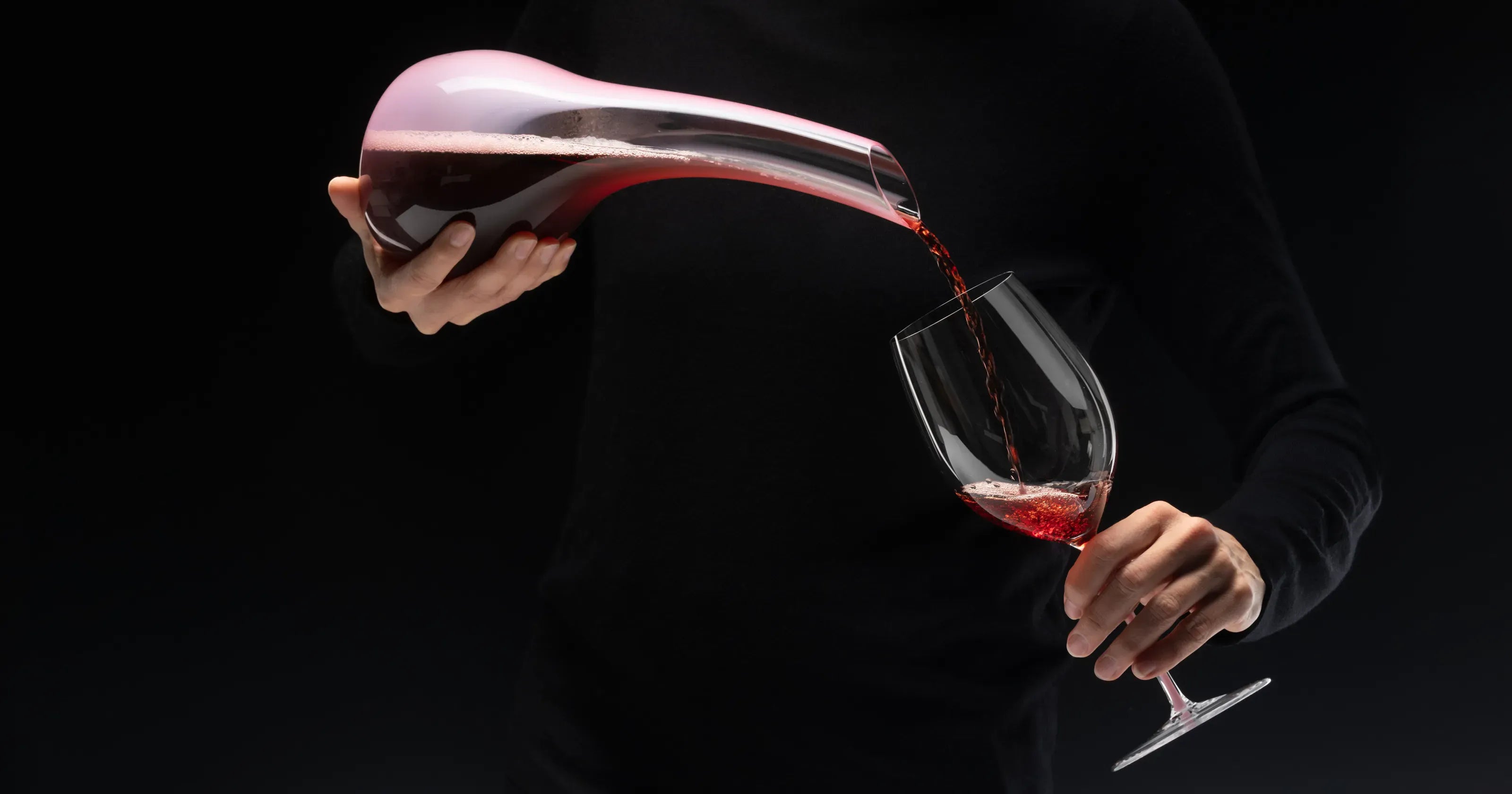
A decanter does two things at once. It separates a wine from the sediment it has thrown over the years, and it opens the wine to air — softening tannins, releasing aromas, letting a closed bottle become itself. Which of the two matters more depends entirely on what you are pouring, and that is what should guide your choice of shape.
Our selection brings together the finest handmade crystal from RIEDEL, the mouth-blown pieces of Josephinenhütte and the French craftsmanship of L'Atelier du Vin. Many are free-blown without a mould, which means no two are identical.
Choosing the right decanter
| Style |
What it does |
Best for |
| Wide-based |
Maximum surface contact with air. |
Young, tannic reds that need to open up. |
| Double-decanting |
The wine passes through two chambers, aerating vigorously as it pours. |
Powerful young wines, and anyone who enjoys the theatre of it. |
| Slim and elongated |
Limits oxygen contact while still removing sediment. |
Old and fragile vintages that air would tire. |
| Compact |
Fits in a fridge door; easy to store and pour. |
Whites, rosés and everyday use. |
| Magnum |
Scaled to hold a full 1.5 L bottle. |
Large formats and long tables. |
| Carafes |
Serving rather than aerating. |
Wine and water at the table. |
Frequently asked questions
How long should wine stay in a decanter?
A young, tannic red usually shows best after one to two hours. A mature wine may need only fifteen or twenty minutes — and some old bottles are at their peak the moment they are poured, then fade. When in doubt with an older wine, decant late rather than early.
Do white wines need decanting?
Less often, but yes for full-bodied whites and older vintages. A compact decanter that fits in the fridge door makes this practical.
How do you clean a crystal decanter?
Rinse with warm water immediately after use and let it drain upside down. Avoid detergent, which leaves traces the next wine will pick up. Most handmade crystal is hand wash only; a few models are dishwasher safe and it is noted on the product page.
Why is each piece described as unique?
Free-blown decanters are shaped without a mould, so height, curve and weight vary slightly from one to the next. The piece you receive will not be identical to the photograph, and that is the point.
What is the difference between a decanter and a carafe?
A decanter is designed to aerate and to separate sediment. A carafe is designed to serve. The shapes overlap, but a carafe generally has a narrower base and is as happy holding water as wine.