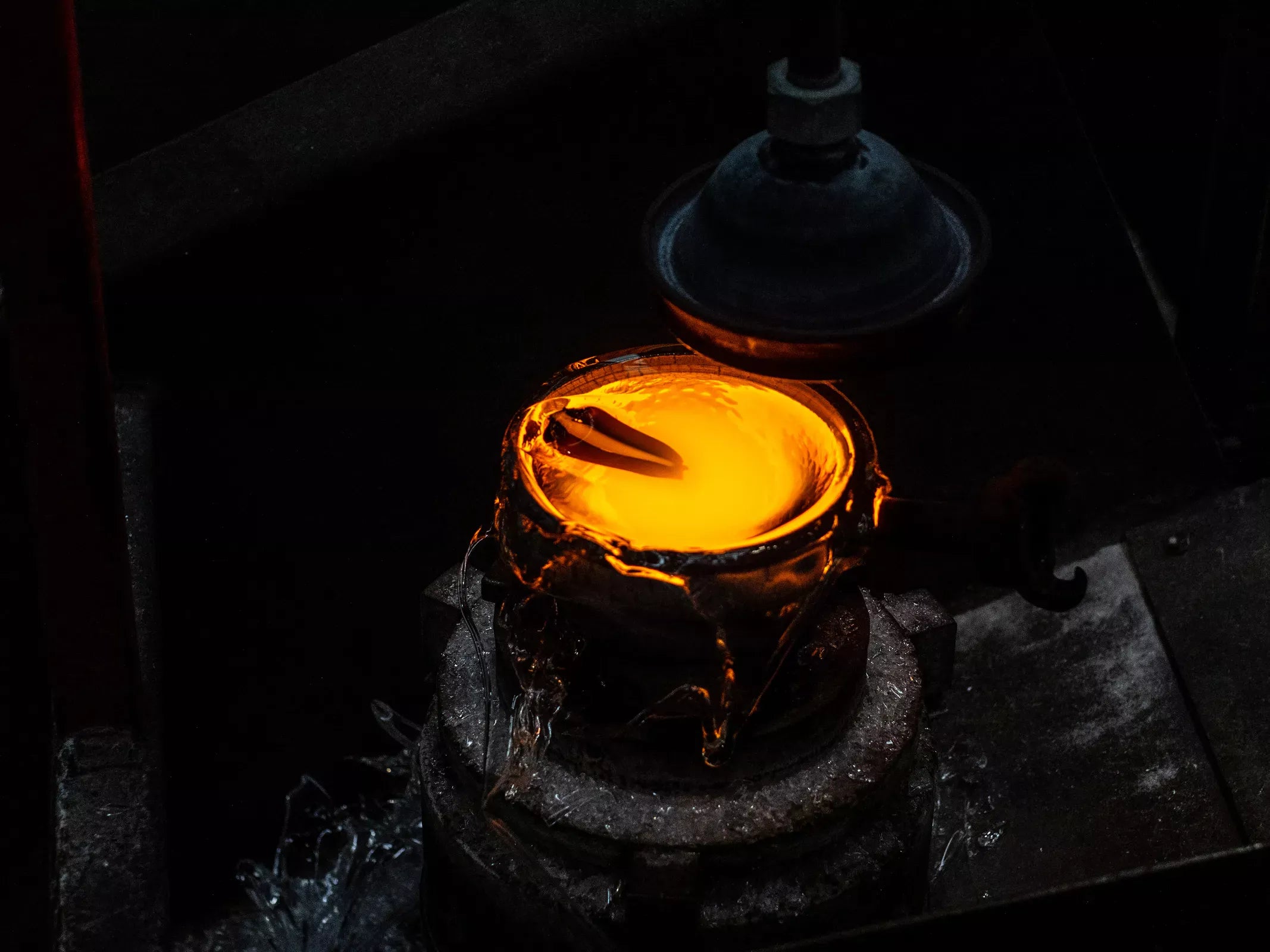
RIEDEL has been making glass in Austria since 1756, across eleven generations of the same family. It was Claus Riedel who first understood, in the 1950s, that the shape of a vessel changes how a wine is perceived — an idea that reshaped the entire industry. That same thinking governs the decanters: every curve exists for a reason, and the sculpture is a consequence of the function, not the other way around.
Many pieces are free-blown by master glassblowers without a mould, which means height, weight and curve vary slightly from one to the next. No two are identical, and the one you receive will not be quite the same as the photograph.
The RIEDEL decanter families
| Family |
Character |
| Amadeo |
Named after Mozart and created for RIEDEL's 250th anniversary. The lyre shape is among the most recognisable in the world. Also in mini and Black Tie versions. |
| Double-decanting |
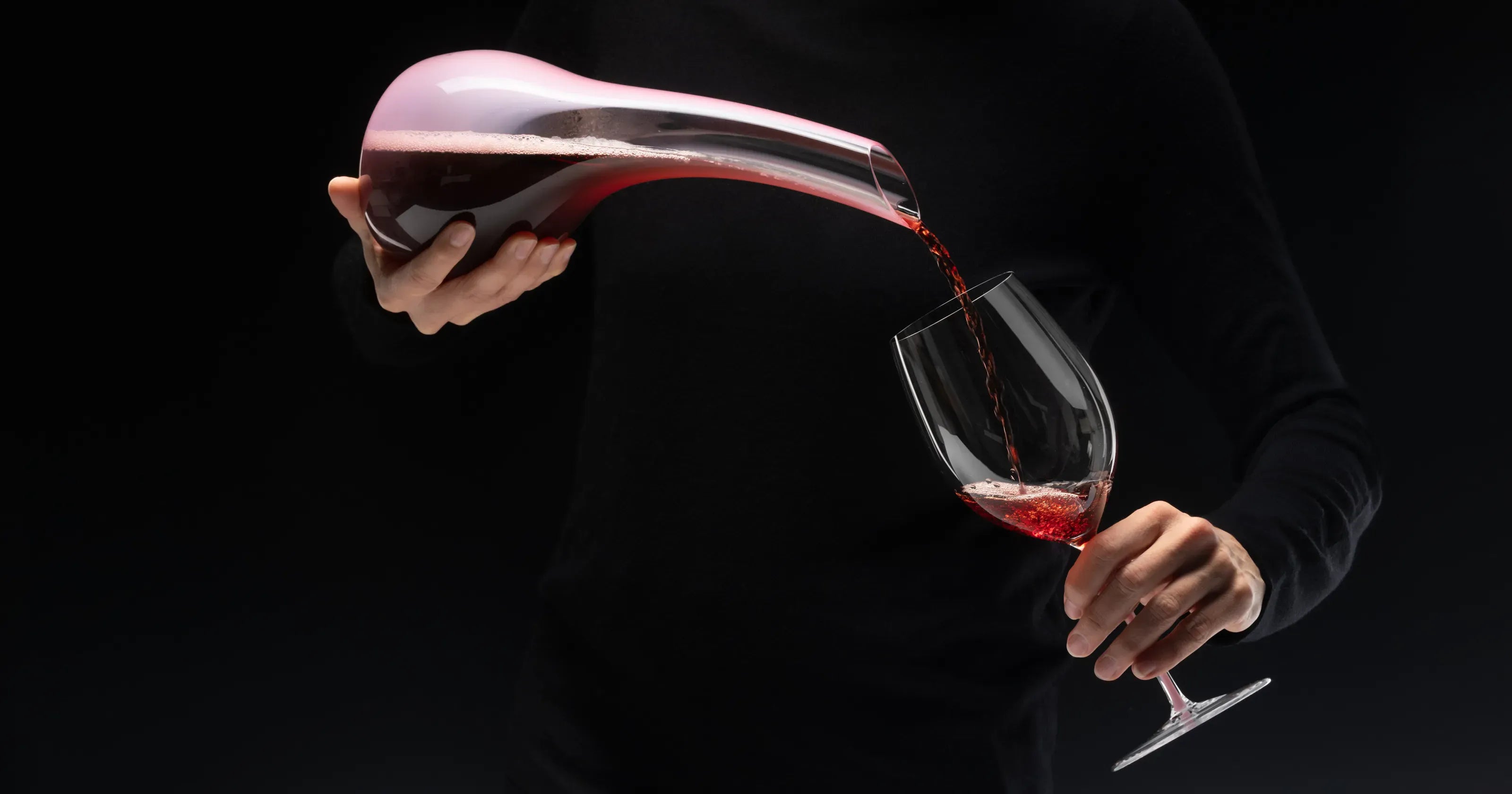
Mamba, Boa, Eve, Horn and Escargot. The wine passes through two chambers and aerates vigorously — audibly, in the case of the Mamba. |
| M Series |
Margaux, Marne and Mosel. Compact forms reinterpreted from cognac bottles. The Mosel fits in a fridge door. |
| Black Tie |
A crystal tuxedo stripe running through the body. The Face to Face carries the profiles of Maximilian and Laetizia Riedel. |
| Ultra & Cornetto |
The classics. Ultra's wide base for maximum aeration; Cornetto's slender profile for fragile older vintages. Both in magnum format. |
| Sculptural |
Swan at 60 cm, Ayam, Curly, Tyrol and the compact dishwasher-safe O. |
Frequently asked questions
What does “free-blown” mean?
The glass is shaped by hand without a mould. It is the most demanding technique in glassmaking and the reason each piece carries small variations. Machine-made decanters are identical to one another; these are not.
Which RIEDEL decanter should I choose for old wine?
A slim, elongated form such as the Cornetto. It separates sediment while limiting contact with air, which an old bottle can find tiring. Save the wide bases and the double-decanting models for young, tannic reds.
Are they dishwasher safe?
Most handmade pieces are hand wash only. The O and the Swan are exceptions. It is stated on each product page.
Is RIEDEL crystal lead-free?
Yes. The decanters are made in lead-free crystal.
Why is a RIEDEL decanter worth it?
Two reasons, and they are separable. The shape genuinely changes how a wine behaves in the glass — that is measurable. And the object itself is made by hand in a tradition running back to 1756, which is why several of these pieces end up on the table long after the bottle is finished.