

The shape of a wine glass changes how a wine tastes. The bowl gathers the aromas rising from the surface, the rim decides how they reach your nose and how the wine lands on your palate, and the thinness of the crystal decides how little stands between the two. A large bowl opens up a young red; a narrower one preserves the freshness of a white. It is not a luxury detail — it is the difference between tasting a wine and reading it.
Quick answer
- Full-bodied reds: a large, wide bowl to let complex aromas unfold.
- Whites: a smaller, more upright bowl to preserve freshness and acidity.
- Champagne and sparkling: a tulip bowl, not a narrow flute, which traps aromatics.
- Everyday drinking: one well-designed universal glass covers reds, whites and rosés.
- Handblown versus machine-made: a hand-finished rim you barely feel, and clarity that shows the wine's true colour.
Why your wine glass changes the taste
 Most of what we call taste is actually smell. The tongue registers only a handful of basic sensations — sweet, sour, salty, bitter — while the nose distinguishes thousands of distinct aromas. A wine glass is, above all, a tool for delivering aroma to your nose in the most concentrated, expressive way possible.
The bowl gathers volatile aromatic compounds as they rise from the wine's surface. A wider bowl gives young, tightly wound wines room to breathe. The rim then shapes how those aromas funnel toward you, and how the wine itself flows onto your palate. Change any of these variables and you change the experience in the glass.
Which is also why the glass alone is not enough: temperature decides which aromas are released at all. Our guide to serving temperatures covers that side of it, and if you want to learn to name the aromas once you can smell them, that is what a wine aroma kit is for.
The anatomy of a wine glass
Four parts, and each does a job.
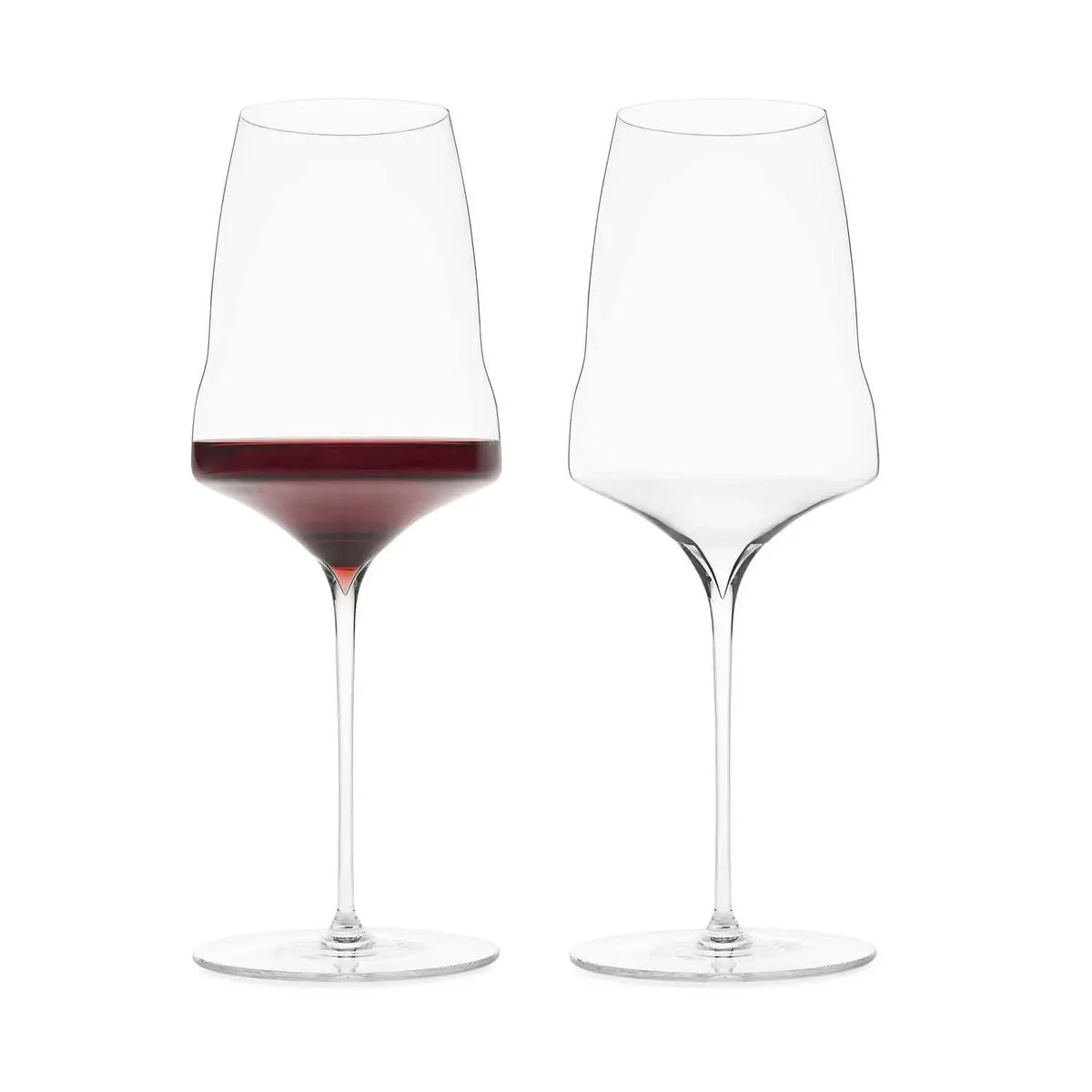
The bowl is where aroma collects. Larger bowls suit complex reds; narrower bowls preserve the delicate aromatics and bubbles of whites and sparkling wines.
The rim decides how cleanly the wine reaches you. The thinner and more precise it is, the less it interrupts the flow. A fine, seamless rim is the clearest hallmark of quality crystal.
The stem lets you hold the glass without warming the wine with your hand, and without leaving prints on the bowl.
The base provides balance and stability, and completes the visual line of a well-made glass.
The right shape for every wine
| Wine | Bowl shape | Why |
|---|---|---|
| Full-bodied red | Large and wide | Volume and surface area soften youthful intensity and let layered aromas unfold. |
| White | Smaller, upright | Concentrates citrus and floral notes, keeps the wine cool and the acidity lively. |
| Champagne and sparkling | Tulip | Preserves the fine bead while letting toasty, complex aromas develop. A flute does not. |
| Everyday and mixed | Universal | One excellent glass beats a shelf of specialised ones you rarely reach for. |
 There is no single perfect glass for every wine, and that is precisely the point. Full-bodied reds such as Burgundy or Barolo benefit from a broad, generous bowl that coaxes out the layers of fruit, spice and earth that define a great red. Whites are better served in a slightly smaller, more upright bowl that preserves their fresher aromatics and directs the wine to highlight the crisp acidity that gives them their energy.
 Champagne has its own requirements, and the modern approach has moved away from the narrow flute. A tulip-shaped bowl preserves the fine bead of bubbles while still allowing the wine's toasty complexity to develop — a lively mousse and genuine aromatic expression, rather than one at the cost of the other.
Handblown crystal versus mass-produced glass
 Handblown crystal is thinner, lighter and more precise than machine-made glass. The rim is finished by hand to be almost imperceptible against your lips, so nothing stands between you and the wine. Held to the light, fine crystal has a clarity that shows off a wine's true colour without distortion.
Beyond the sensory advantage there is the object itself. A mouth-blown glass is made by a skilled artisan rather than stamped out by a machine, and it carries the subtle individuality only handwork produces. This is the philosophy behind JOSEPHINE by Josephinenhütte — handblown crystal designed by some of the most respected names in glassware. The same craft applies to decanters and carafes.
Frequently asked questions
Does the glass really change the taste of wine?
Yes, though what changes is aroma delivery rather than the wine itself. The bowl concentrates volatile compounds and the rim controls how they reach you. Pour the same bottle into a tumbler and into a well-shaped glass side by side and the difference is immediate.
How many wine glasses do I actually need?
Two shapes cover almost everything: one for reds and one for whites. Add a tulip for sparkling if you drink it often. If you would rather own one, a universal glass performs well across reds, whites and rosés.
Why has the champagne flute fallen out of favour?
Because it traps aromatics. The narrow shape was designed to show off bubbles, but it holds the aromas inside the glass instead of releasing them. A tulip bowl keeps the bead and lets the wine smell of something.
Can handblown crystal go in the dishwasher?
Most cannot. Hand wash with warm water and a soft cloth, avoid sudden temperature changes and abrasive detergents, hold by the stem, dry with soft linen and store upright. Individual products state their own care instructions.
Is handblown crystal worth the difference in price?
It depends on how you drink. If wine is something you pay attention to, the thinner rim and the aromatic precision are noticeable from the first sip. If you mostly drink casually, a good machine-made glass will serve you well.
What is lead-free crystal?
Crystal made with alternative minerals in place of lead oxide, giving the same brilliance and thinness without any lead content. It is now the standard for quality glassware, JOSEPHINE included.
The glass is part of the wine
A great bottle deserves a glass worthy of it. The right shape carries the aroma, the fine crystal rim carries the wine cleanly to your palate, and the craft behind it turns an ordinary pour into a moment worth savouring. Start with the wines you drink most: a pair of dedicated red and white glasses covers most occasions, a champagne glass adds celebration, and a universal glass does nearly everything well.
If you have settled on JOSEPHINE and want to know which number does what — including the water, cocktail and spirits glasses, and which decanter suits a young wine versus an old one — our guide to the full JOSEPHINE range walks through every piece.

Share:
The Ideal Temperature to Serve Wine: A Complete Guide
How to Use a Coffee Aroma Kit: A Beginner's Guide to Training Your Nose